VISEN CENTER DISTINGUISHED LECTURE SERIES AT RICE UNIVERSITY PRESENTS:

Practical, Provably Unbreakable Encryption
Michael O. Rabin
Thomas J. Watson, Sr. Professor of Computer Science
Harvard University
Wednesday, August 27th @ 4:00 p.m.
McMurtry Auditorium, Duncan Hall
Reception to follow in Martel Hall
http://www.events.rice.edu/index.cfm?EventRecord=10234
Cryptography is an essential tool for secure communication, computer security, and safe commercial transactions. Modern Cryptography is based for its security on unproven assumptions such as the intractability of factorization. The possible breaking of current encryptions by algorithmic innovations will entail disastrous consequences. The primary suggested method to overcome this problem is use of Quantum Cryptography. This solution is encumbered by serious practical and cost limitations. We shall describe a realization of provably unbreakable encryption within a network of computers, which is readily implemented. The presentation will be self contained and accessible to a wide audience.
Biography for Michael Rabin
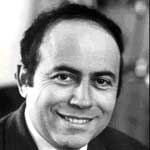 Rabin got his M.Sc. from the Hebrew University and his Ph.D. from Princeton University, where he had his first academic appointment. Later he was visiting member of the Institute for Advanced Study, interacting with K. Godel. He was Albert Einstein Professor of Mathematics at the Hebrew University, serving as its Rector (Academic Head) from 1972 to 1975. At various times he held Visiting Professorships at Yale University, the Weizmann Institute, the Israel Technion, UC Berkeley, MIT, University of Paris, the Courant Institute of Mathematics, Caltech, ETH Zurich,Columbia University, and Kings College London. He was Saville Fellow at Merton College, Oxford, and Steward Fellow at Gonville and Caius College, Cambridge. From 82 to 94 he served on the IBM Science Advisory Committee. His contributions were recognized by awards including the ACM Turing Award in Computer Science, the ACM Kanellakis Theory and Practice Award, the Rothschild Prize in Mathematics, the Weizmann Prize in Exact Sciences, the IEEE Charles Babbage Award, the Harvey Prize for Science and Technology, the Israel Prize in Computer Science, and the EME"T Prize in Computer Science. Rabin was elected as member or foreign honorary member to academies including the US National Academy of Sciences, the French Academy of Sciences, the American Academy of Arts and Sciences, the American Philosophical Society, the Israel Academy of Sciences and Humanities, and the Foreign Member Royal Society. He holds honorary degrees from New York University, Haifa University, the University of Bordeaux I, Israel's Open University, Ben Gurion University, and the University of Wroclaw. Rabin's research interests include complexity of computations, efficient algorithms, randomized algorithms, DNA to DNA Computing, parallel and distributed computation and computer security. During the past three years he has created, with Y. Aumann and Y.Z. Ding, Hyper-Encryption, the first ever encryption scheme provably providing everlasting secrecy against a computationally unbounded adversary; invented, with S.Micali and J. Kilian, Zero Knowledge Sets, a new primitive for privacy and security protocols; invented and implemented, with W. Yang and H. Rao, a micro chip for physical generation of a strong stream of truly random bits. Hyper-Encryption has been implemented at Harvard via a novel Virtual Satellite model.